
If you’ve just received a diagnosis for your child, you might be wondering:
“Okay…now what?”
And honestly?
That’s a pretty reasonable question.
Because there isn’t one giant “Special Needs Services” department that follows your child from birth through adulthood.
Instead, you move through systems.
Birth to 3.
Preschool.
School.
High school.
Adulthood.
And every time you reach one of those transitions, you may find yourself learning a whole new set of acronyms, rules, agencies, applications, waiting lists, and phone numbers.
It’s exhausting.
And one of the hardest parts is that the services your child receives at one age may not automatically continue when they get older.
So let’s take a look at the big picture.
This isn’t meant to be a complete list of every service available. Services vary by state, diagnosis, eligibility, income, age, and individual need.
Think of this as your roadmap.
Birth to 3: Early Intervention
For children from birth through age 2, one of the major systems parents should know about is Early Intervention.
Under IDEA, this is called Part C.
States operate their own early-intervention systems, so the name and process can vary.
The purpose is to identify developmental needs early and provide services that support the child and family.
Depending on the child’s needs, services can include things such as:
- Developmental services
- Speech-language services
- Occupational therapy
- Physical therapy
- Family training and counseling
- Social work
- Assistive technology
- Other appropriate supports
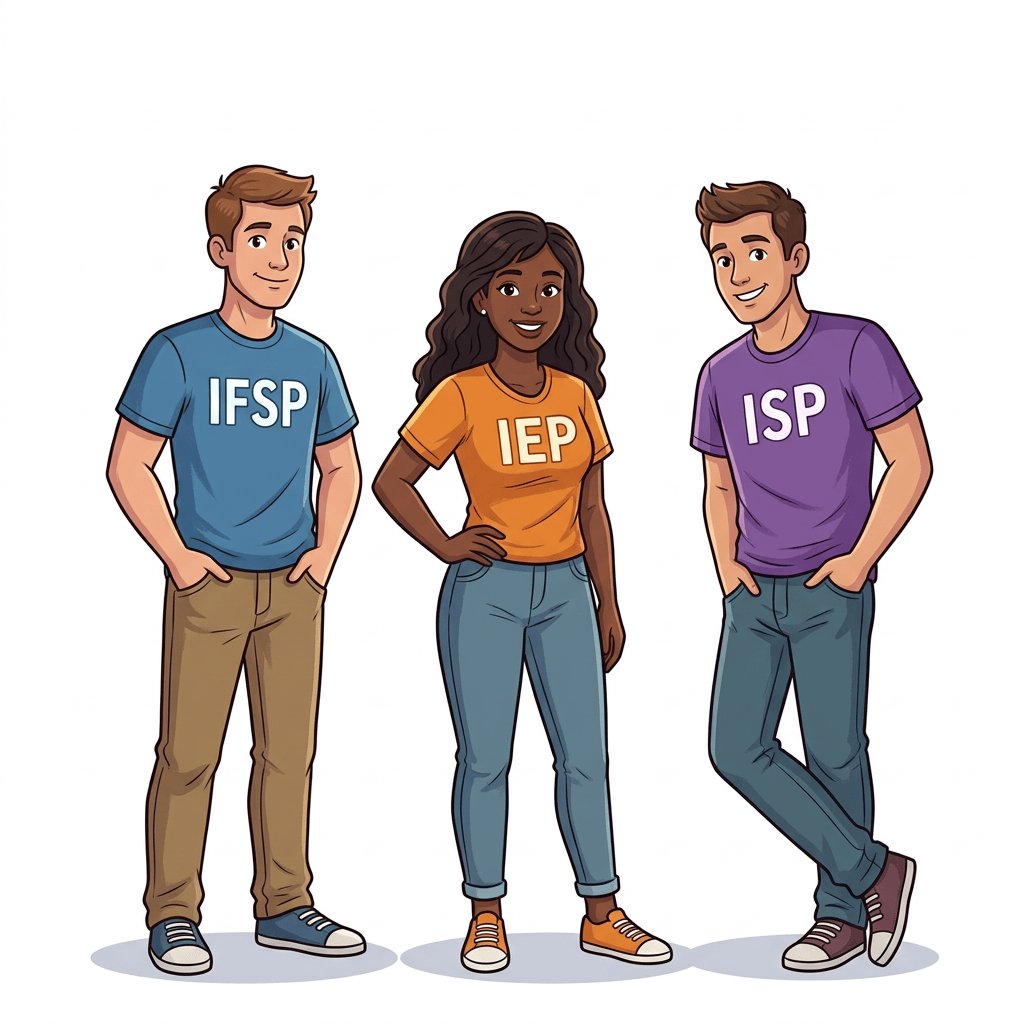
Services are generally provided through an IFSP.
IFSP — Individualized Family Service Plan
An IFSP is different from an IEP.
The IFSP focuses on the child and the family.
It looks at:
- The child’s strengths and needs
- Family concerns and priorities
- Available resources
- Desired outcomes
- Services and supports
And that’s important because, at this age, the family is often deeply involved in delivering and coordinating the child’s care.
Parent tip:
Don’t wait until your child is almost three to ask:
“What’s going to happen when Early Intervention ends?”
That transition is coming.
Start learning about it early.
Around Age 3: The Big Transition
This can be one of the first major system changes.
Your child may transition from Early Intervention into preschool special education services under IDEA Part B.
Depending on the child and the state, services may look very different from Early Intervention.
The focus shifts more toward educational needs.
Your child may be evaluated for eligibility for special education.
If eligible, an IEP may be developed.
And suddenly you’re hearing:
IDEA. IEP. FAPE. LRE.
Welcome to the next level of the acronym game.
Ages 3 Through School Years: Special Education
Once your child enters the school system, the IEP may become one of your most important documents.
Depending on individual needs, school-based services can include:
- Specialized instruction
- Speech-language services
- Occupational therapy
- Physical therapy
- Counseling
- Behavioral supports
- Assistive technology
- Transportation
- Accommodations
- Other related services
Some students may instead qualify for protections under Section 504 and receive a 504 Plan.
Some students may receive both IDEA and Section 504 protections.
The important thing is that eligibility is based on the individual child and the applicable legal requirements—not simply a diagnosis.
School Isn’t Just About Academics
This is something I wish more parents heard early.
Special education isn’t only about reading, writing, and math.
Depending on the child’s needs, education may also involve:
- Communication
- Social skills
- Behavior
- Executive functioning
- Mobility
- Independence
- Daily living skills
- Self-advocacy
- Transition planning
And as children get older, those functional skills can become incredibly important.
Because eventually…
School ends.
And adulthood begins.
Elementary School: Build the Foundation
Elementary school is often where children and parents are learning how the system works.
You may be dealing with:
- IEP meetings
- Evaluations
- Speech
- OT
- PT
- Behavior supports
- Accommodations
- Classroom placement
- Progress monitoring
This is also a great time to start teaching your child about their own needs.
Even if they’re very young.
Instead of always saying:
“Mom needs you to have a break.”
Eventually, we want the child to be able to say:
“I need a break.”
That is the beginning of self-advocacy.
Middle School: Start Looking Ahead
Middle school is where I encourage parents to start thinking beyond the immediate school year.
Yes, you still have to worry about homework.
And hormones.
And lockers.
And somehow remembering that Wednesday is spirit day.
But this is also a good time to start asking:
What will adulthood look like for my child?
Depending on the child, start thinking about:
- Independence
- Communication
- Transportation
- Employment
- Daily living skills
- Healthcare
- Community activities
- Social relationships
- Financial skills
- Self-advocacy
Not because your child needs to have all of this figured out at 12.
They absolutely don’t.
But because adulthood takes planning.
High School: Transition Planning Becomes Critical
Eventually, the conversation needs to shift from:
“How is my child doing in school?”
to:
“What happens after school?”
IDEA requires transition planning for eligible students at the appropriate time, and federal requirements generally call for transition services to be addressed no later than the first IEP in effect when the student reaches the applicable age under IDEA.
This is where the IEP can begin focusing much more intentionally on life after high school.
Depending on the student, transition planning may involve:
- Employment
- Postsecondary education
- Vocational training
- Independent living
- Community participation
- Self-determination
- Transportation
Parents: Don’t wait until graduation.
The day your child walks across that stage is not the day you should start figuring out what happens next.
Vocational Rehabilitation
You may hear about Vocational Rehabilitation, often shortened to VR.
VR agencies help eligible individuals with disabilities prepare for, obtain, maintain, and advance in employment.
Services vary, but may include things such as:
- Career counseling
- Job training
- Employment services
- Job placement assistance
- Workplace supports
- Assistive technology
- Other individualized employment services
Eligibility and services vary by state.
Parent tip:
If employment is one of your child’s goals, learn about your state’s VR system before graduation.
Waiting until the diploma is in your hand can create an unnecessary gap.
Adult Community Mental Health
For some individuals with disabilities, Community Mental Health, or CMH, becomes an important part of adult life.
The exact services vary by state.
In Michigan, local Community Mental Health Service Programs can serve people with needs related to areas such as mental illness, intellectual/developmental disabilities, and substance use disorders.
Services can vary considerably depending on eligibility and individual needs.
They may include things such as:
- Case management
- Skill-building
- Crisis services
- Behavioral health services
- Employment supports
- Residential or community living supports
- Other community-based services
Important:
CMH isn’t simply “therapy.”
It can be a much broader support system.
Medicaid and Other Healthcare Supports
Healthcare needs don’t magically disappear at 18.
In fact, they can become more complicated.
Depending on eligibility and your state, families may need to investigate:
- Medicaid
- Medicaid waivers
- Home- and community-based services
- Personal care supports
- Medical transportation
- Durable medical equipment
- Behavioral health services
- Other healthcare programs
Some programs have significant waiting lists.
This is one reason starting early matters.
SSI and SSDI
As children approach adulthood, families may also begin learning about SSI and SSDI.
These are Social Security programs, but they are not the same thing.
SSI — Supplemental Security Income is a needs-based program with income and resource requirements.
SSDI — Social Security Disability Insurance is based on disability and qualifying work or insured-status requirements. There is also a benefit called Disabled Adult Child benefits for some adults whose disability began before a certain age and who have a qualifying parent’s Social Security record.
Eligibility can be complicated.
Don’t assume that a diagnosis automatically means someone qualifies.
And don’t assume that not qualifying as a child means the person can never qualify as an adult.
Housing and Community Living
Eventually, many families start asking:
Where will my adult child live?
That answer can look very different depending on the person.
Possibilities may include:
- Living with family
- Supported living
- Group homes
- Independent living with supports
- Other residential programs
Availability varies dramatically by location and funding.
And unfortunately, waiting lists can be long.
Parent advice:
Don’t wait until you’re desperate.
Start learning about housing and residential options while your child is still in school.
Employment
Employment can be a major part of adult life for many people with disabilities.
Depending on the individual’s abilities and goals, possibilities might include:
- Competitive integrated employment
- Supported employment
- Vocational training
- Job coaching
- Internships
- Volunteer experiences
- Day or employment programs
- Self-employment
The goal shouldn’t automatically be:
“What job can we find?”
Instead:
“What kind of work is meaningful to this person, and what support might help them succeed?”
Transportation
Transportation can become one of the biggest barriers to adult independence.
Can your adult child:
- Drive?
- Use public transportation?
- Use paratransit?
- Walk safely in the community?
- Get to work?
- Get to medical appointments?
- Get to social activities?
Transportation isn’t just about getting from Point A to Point B.
It can determine whether someone can actually participate in their community.
Legal Decision-Making
As your child approaches adulthood, another conversation eventually appears:
Who makes decisions?
Parents sometimes assume that turning 18 automatically means guardianship.
It doesn’t.
Depending on the person’s abilities and circumstances, families may explore options such as:
- Independent decision-making
- Supported decision-making
- Powers of attorney
- Healthcare representatives
- Guardianship or other legal arrangements
These are serious legal decisions and vary by state.
The goal should be to protect the individual’s rights while providing the level of support they actually need.
The Biggest Trap: Assuming Services Automatically Continue
This is probably the most important thing I want parents to understand.
Your child may receive a service at age 2.
That doesn’t necessarily mean they’ll receive it at age 3.
Your child may have an IEP at age 17.
That doesn’t mean the same services automatically continue after graduation.
Your child may have school-based speech therapy.
That doesn’t mean they’ll automatically have adult speech services.
Your child may have school transportation.
That doesn’t mean transportation to a job magically appears.
Every transition can require a new application, new eligibility determination, new agency, or new plan.
This is why planning matters.
Think of It as a Relay Race
I like to think of disability services as a relay race.
Early Intervention has the baton.
Then preschool.
Then school.
Then transition services.
Then adult agencies.
The problem?
Sometimes nobody clearly explains:
“Okay, here’s who gets the baton next.”
Parents end up standing in the middle of the track holding the baton wondering what the heck they’re supposed to do with it.
So ask.
Who takes over next?
When do I contact them?
Is there a waiting list?
What paperwork do I need?
What happens if my child doesn’t qualify?
Those questions can save you a lot of frustration later.
Your Parent Roadmap
You don’t have to solve adulthood when your child is three.
But you can keep the next transition in sight.
Birth–3
Early Intervention / Part C / IFSP
Around 3
Preschool special education / IDEA Part B / IEP
School Years
IEP or 504 / special education / related services / accommodations
Middle & High School
Transition planning / self-advocacy / employment / independent living
Before Graduation
VR / adult healthcare / Medicaid programs / CMH / SSI or other benefits / housing / transportation
Adulthood
Employment / healthcare / community living / relationships / transportation / benefits / continued support
The exact services will depend on the individual.
And that’s okay.
Start Where You Are
If you’re reading this because your child was just diagnosed, please don’t panic.
You don’t have to figure out their entire life today.
You don’t need to know what housing will look like when they’re 25.
You don’t need to know what job they’ll have.
You don’t need to know whether they’ll live independently.
You don’t even have to understand every acronym yet.
You just need to figure out the next step.
Then the next one.
And the next one.
Because this journey isn’t one giant decision.
It’s a series of transitions.
And the more you understand about what’s coming, the less likely you are to be blindsided when the next system says:
“Oh, you’re aging out.”
Trust me.
You don’t want that phone call to be your first introduction to the next chapter.
Palace in Underland Parent Reminder
Write these five questions down:
1. What services does my child qualify for right now?
2. Who provides them?
3. When does eligibility end?
4. What system comes next?
5. How early should I start the transition?
Keep asking.
Keep copies of your paperwork.
Keep names and phone numbers.
Keep track of waiting lists.
And most importantly:
Don’t assume someone else is planning the next chapter.
Sometimes the person who knows the most about what your child needs…
is you.
This article is a general overview and is not legal, medical, or financial advice. Services, eligibility requirements, names of programs, and transition ages can vary by state and individual circumstances. Always verify current requirements with the appropriate state or local agency.


Leave a comment