
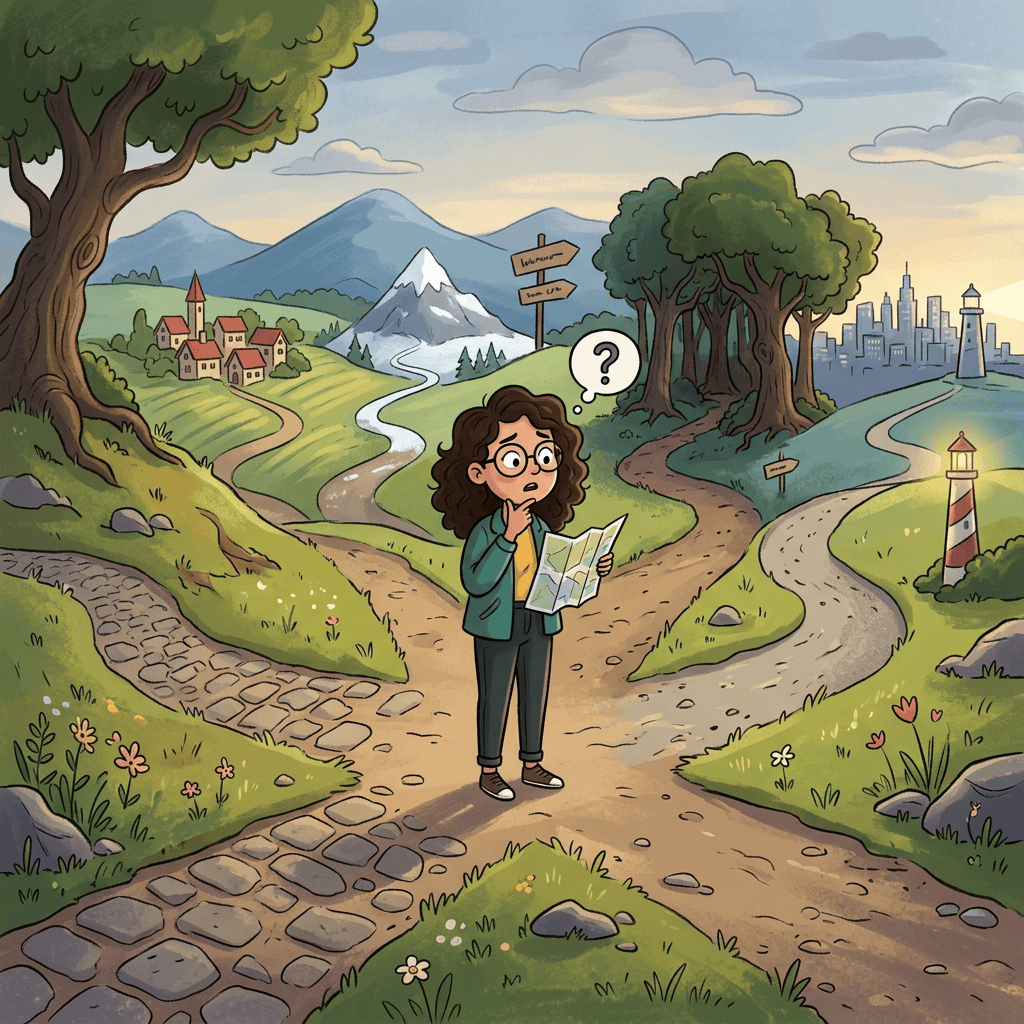
Take a deep breath or two.
Seriously.
If your child was just diagnosed with autism, a developmental disability, a learning disability, a mental health condition, a physical disability, or another condition that means your child may need additional support, you may currently be experiencing about 47 different emotions at the same time.
Relief.
Fear.
Grief.
Hope.
Confusion.
Anger.
And possibly the overwhelming desire to Google everything at two in the morning.
I know.
And here’s the thing I want you to hear first:
You do not have to figure out your child’s entire life today.
You just need to figure out the next step.
The systems change as your child grows. The people change. The acronyms change. The paperwork changes.
But there are some basic roads you can learn to recognize.
So let’s walk through them.
Birth to 3.
Preschool through high school.
And then adulthood.
Because special needs don’t magically disappear when a child turns 18 or graduates from high school.
The system just changes.
FIRST: WHAT KIND OF DIAGNOSIS ARE WE TALKING ABOUT?
Before we start talking about services, there’s an important distinction.
A medical diagnosis and eligibility for a particular service are not always the same thing.
Your child’s doctor may diagnose a condition.
That diagnosis may help you access certain medical or therapeutic services.
But schools, early intervention programs, Medicaid programs, insurance companies, vocational programs, and adult service systems may each have their own eligibility requirements.
So don’t assume:
“My child has a diagnosis, therefore we automatically qualify for everything.”
Unfortunately, the systems don’t make it quite that easy.
A diagnosis is often the beginning of the process—not the end.
BIRTH TO 3: START EARLY
If your child is under three and you have concerns about development, one of the first places to look is early intervention.
Under the Individuals with Disabilities Education Act (IDEA), early intervention for eligible infants and toddlers is provided through Part C.
In Michigan, that system is called Early On.
Early On serves infants and toddlers from birth through age three who have developmental delays and/or disabilities and their families. This is true of every state’s early intervention program.
And here’s something I really want parents to know:
You don’t have to wait until everything is figured out.
If you are worried about your child’s development, you can ask about an evaluation or referral.
Early intervention can address areas such as:
- Physical development
- Cognitive development
- Communication
- Social-emotional development
- Adaptive or self-help skills
It can also help families connect with other resources and services.
WHAT IS AN IFSP?
Here’s our first big acronym.
IFSP = Individualized Family Service Plan.
If your child receives early intervention services under IDEA Part C, the IFSP is the plan that identifies the child’s developmental needs, the family’s priorities, and the early intervention services being provided.
And notice the word:
FAMILY.
Early intervention isn’t supposed to be only about what happens to your child in a therapy room.
The goal is to help your child develop within the context of everyday life and to support the family.
WHAT HAPPENS WHEN YOUR CHILD TURNS 3?
This transition can sneak up on parents.
You’ve spent the first few years figuring out Early On, therapists, appointments, evaluations and your child’s needs.
Then suddenly someone says:
“Your child is turning three.”
And you’re thinking:
“Yes. I’m aware. I was there.”
But turning three can mean a major transition in services.
IDEA Part C covers infants and toddlers, while IDEA Part B covers preschool and school-age special education.
Federal rules require states to have procedures for a smooth transition from Part C to preschool or other appropriate services.
In Michigan, special education services extend beyond the federal minimum and can serve eligible students through age 25.
For Michigan families, Build Up Michigan is another resource for children ages 3–5, and local school districts provide early childhood special education services for eligible children.
AGES 3 THROUGH HIGH SCHOOL: WELCOME TO THE SCHOOL SYSTEM
This is where many parents first encounter the wonderful world of:
IEP
504
FAPE
LRE
FBA
BIP
OT
PT
SLP
And approximately 900 other acronyms.
Don’t panic.
You don’t need to memorize them all.
At this stage, your major question becomes:
What does my child need to access and participate in education?
For students who qualify under IDEA, the school develops an IEP — Individualized Education Program.
An IEP identifies educational needs, goals, and the programs and services the school will provide.
In Michigan, eligible students can receive special education services from ages 3 through 25.
Another possibility is a 504 Plan, which comes from Section 504 of the Rehabilitation Act.
A 504 Plan can provide accommodations and other supports for a qualified student with a disability.
And an important reminder:
An IEP and a 504 are not the same thing.
They come from different laws and have different legal frameworks.
I have a separate article explaining that difference in detail because, honestly, it deserves its own conversation.
YOUR JOB AS A PARENT IS NOT TO KNOW EVERYTHING
This is something I wish someone had told me much earlier.
You don’t need to walk into your first IEP meeting knowing special education law.
You don’t need to know what every acronym means.
You don’t need to know exactly what service your child needs before asking for help.
You are allowed to say:
“I don’t understand what that means.”
You are allowed to ask:
“What data are you using to make that decision?”
You can ask:
“How will we know if this is working?”
And:
“What happens if it isn’t working?”
Those are good questions.
DON’T JUST THINK ABOUT GRADES
One of the biggest mistakes we can make is thinking about disability only in terms of academics.
Ask about the whole child.
Can they communicate?
Can they move safely around school?
Can they manage transitions?
Can they regulate?
Can they make friends?
Can they advocate for themselves?
Can they manage personal care?
Can they navigate the building?
Can they understand safety?
Can they eventually work?
Can they eventually live with some level of independence?
Because those things matter too.
And eventually, they become incredibly important.
START THINKING ABOUT ADULTHOOD EARLIER THAN YOU THINK
This is one of my biggest pieces of advice.
Don’t wait until graduation to think about adulthood.
If your child is going to need support as an adult, start learning about those systems while they’re still in school.
Depending on the individual, that might include:
- Employment services
- Vocational rehabilitation
- Transportation
- Adult healthcare
- Community living
- Day programs
- Supported employment
- Independent living supports
- Benefits
- Guardianship or alternatives to guardianship
- Social and recreational opportunities
- Behavioral health services
- Community mental health
You don’t have to solve all of these at age 12.
But you should know they exist.
THE TRANSITION OUT OF SCHOOL
At some point, the question changes from:
“How do we help this child succeed in school?”
to:
“What does this person’s adult life look like?”
That’s a huge shift.
And it can be scary.
School provides structure.
Teachers.
Therapists.
Transportation.
Schedules.
IEP meetings.
A building that you’re already familiar with.
Then one day:
Graduation.
And everyone says:
“Congratulations!”
And you’re thinking:
“Great. Now what?”
This is sometimes called the transition cliff, because families can suddenly find themselves navigating a completely different set of systems.
That’s why transition planning matters.
Think about:
Employment.
Education or training.
Independent living.
Transportation.
Healthcare.
Relationships.
Community participation.
Mental health.
What your child wants.
And yes—
What you want for your child.
But don’t forget to ask what they want too.
ADULTHOOD: COMMUNITY MENTAL HEALTH
This is another area I don’t think parents hear enough about when their children are young.
In Michigan, Community Mental Health Services Programs, or CMHSPs, are local public systems that provide or coordinate behavioral health services and supports.
Michigan’s CMH network serves children, adolescents, and adults and includes services for people with mental illness, developmental disabilities, and substance use disorders.
CMHSPs can serve as a major entry point into Michigan’s public behavioral health system, with services and eligibility depending on the person’s circumstances and applicable programs.
This is important because:
Adult mental health services are not simply an extension of school services.
Your child may no longer have an IEP.
There may be no school social worker calling you.
There may be no teacher who has known your child for three years.
You may need to establish relationships with an entirely new group of providers.
And if your adult child has a developmental disability, serious mental illness, or significant behavioral health needs, community-based services may become an important part of their support system.
DON’T WAIT FOR A CRISIS TO LEARN WHO TO CALL
This is one of those things that sounds obvious until you’re actually in a crisis.
Find out:
Who is your local CMHSP?
What services do they provide?
Who is eligible?
How do you apply?
What documentation is needed?
What happens if your child is denied?
Who do you call after hours?
Michigan maintains a directory of local CMHSPs and identifies them as the local programs coordinating community mental health services.
For an immediate behavioral health crisis, Michigan also directs people to the 988 Suicide & Crisis Lifeline and the Michigan Crisis and Access Line.
Put those numbers somewhere you can find them.
Not because you expect a crisis.
Because when there is a crisis, you don’t want to start Googling at 2 a.m.
KEEP YOUR OWN FILE
This may be one of the most useful things you can do.
Create a folder.
Paper.
Digital.
Both.
Call it:
“The Human Being Who Happens to Have a Lot of Paperwork.”
Or something more professional if you must.
Keep:
- Diagnostic reports
- Evaluations
- Medical records
- Therapy reports
- IEPs
- 504 Plans
- IFSPs
- School records
- Medication information
- Insurance information
- Service plans
- Contact information
- Important correspondence
- Assessments
- Progress reports
And when possible, keep track of:
Who said what.
When.
What was requested.
What happened next.
Future-you will be grateful.
THE ACRONYM SURVIVAL GUIDE
This is also why I’ve started creating an Underland Acronym Guide.
Because you are going to hear:
IFSP
IEP
504
IDEA
FAPE
LRE
FBA
BIP
ABA
BCBA
RBT
OT
PT
SLP
AAC
CMHSP
MRS
SSI
SSDI
And eventually you may feel like you’ve accidentally enrolled in a graduate course you didn’t ask for.
The Palace in Underland guide will explain the acronyms in plain English and connect them to the larger systems they belong to.
Because knowing what the letters stand for isn’t enough.
You need to know:
What is it?
Who is it for?
When might I encounter it?
Who do I contact?
And:
What questions should I ask?
IF YOUR CHILD WAS JUST DIAGNOSED, START HERE
Don’t try to solve everything.
Start with five things.
1. Get organized.
Create your records folder.
2. Find out what your child is eligible for NOW.
Not someday.
Now.
3. If your child is under 3, investigate early intervention.
In Michigan, that means Early On.
4. If your child is school-aged, learn about your education rights.
Start learning about evaluations, IEPs, 504 Plans, and your school’s special education process.
5. Start learning about adulthood before you think you need to.
Because the systems don’t magically explain themselves when your child turns 18.
AND FINALLY…
Your child is still your child.
Before the diagnosis, they were your kid.
After the diagnosis, they’re still your kid.
The diagnosis may explain some things.
It may open doors to services.
It may give you language for things you’ve been struggling to understand.
It may change your expectations.
It may change your plans.
It may even change you.
But it doesn’t tell you everything about who your child will become.
You don’t know their entire future.
And honestly?
Neither does anyone else.
So take a breath.
Learn what you need to learn.
Ask questions.
Find people who understand the system.
Build your team.
And take it one step at a time.
Because you don’t need a map for the next twenty years.
You just need to find the next turn.
Welcome to Palace in Underland.
It’s complicated down here.
But you don’t have to figure it out alone.
Love and a little chaos,
KT
A note about resources
The information above focuses on the federal framework and Michigan systems as examples. Services, eligibility, timelines, and terminology can differ by state and by individual circumstances.
Michigan resources mentioned in this article:
- Early On Michigan — birth through age 3
- Build Up Michigan — ages 3–5
- Michigan Department of Education Office of Special Education
- Local school district / ISD
- Michigan Rehabilitation Services
- Community Mental Health Services Programs (CMHSPs)
For specific legal questions about your child’s rights, consult a qualified special-education attorney or advocate.


Leave a Reply